
UK casino sites that accept debit cards
 Available in GB
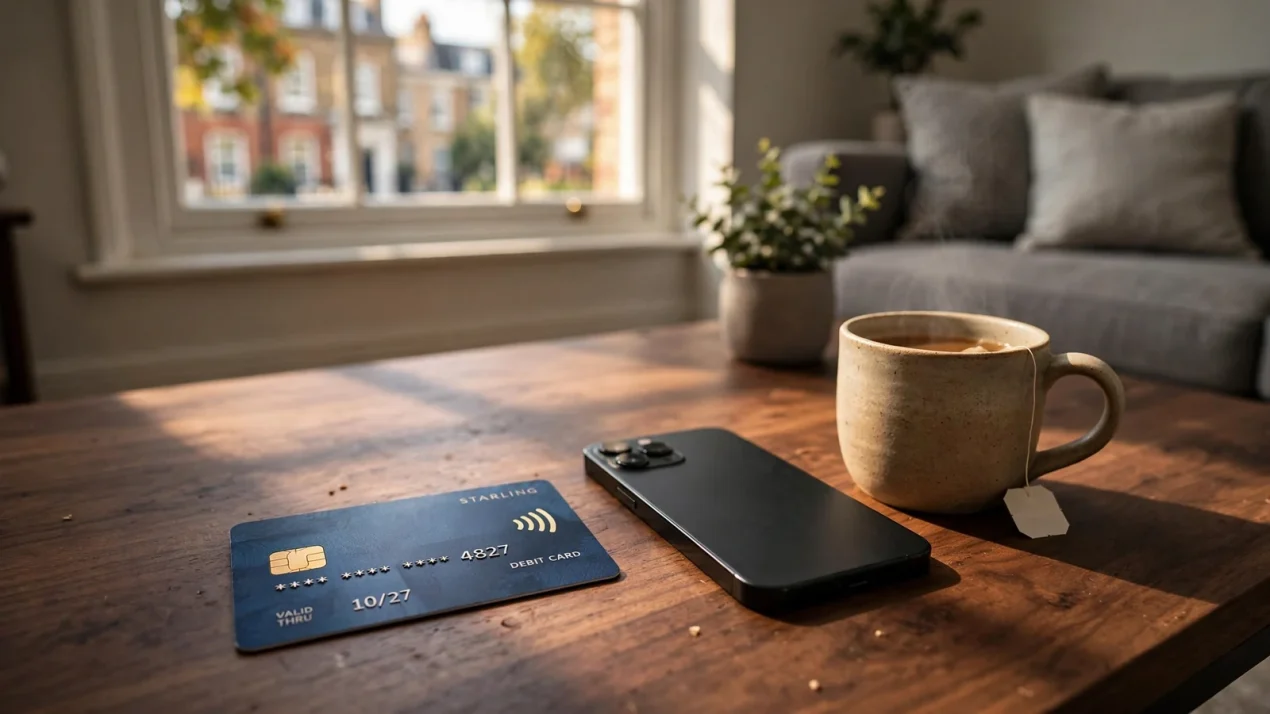
Card acceptance varies by casino and card, and a deposit does not guarantee that a withdrawal will use the same payment route.
What debit-card payments at UK casinos involve
A debit card is a way to move money from your bank account into a casino account. UK casinos commonly accept debit cards, including Visa and Mastercard, so card payment is a familiar option for funding an online account. Whether you can use a particular card depends on the casino and the card itself; the card logo alone does not tell you every detail of acceptance.
The key distinction is where the money comes from. A debit-card payment uses funds in an account you hold with a bank or other card issuer. A credit card draws on borrowed money that you repay later. The two cards may look similar and may carry a Visa or Mastercard logo, but the payment source is different. For gambling, that difference matters: UK remote gambling operators cannot accept credit-card payments, while debit-card payments remain available at many casinos.
Think of the debit card as a payment route, not as a separate casino balance. You choose it in the cashier, enter or select the relevant card details, and request a payment. If the transaction is accepted, the money is credited to your casino account. You then use the account balance for gambling. The card itself does not change how casino games work; it is the means by which funds reach the account.
That distinction can help when comparing a “debit card casino” with other descriptions of a site. The phrase refers to a casino whose cashier offers debit-card payments; it does not mean that the casino issues a special gambling card or that every cardholder will be able to pay. A casino may list Visa and Mastercard as accepted methods, but your own card’s product and the cashier’s current options still matter. The payment method is one part of the account, not a guarantee of access to every feature.
It is also worth separating the card brand from the card type. Visa and Mastercard operate payment networks, while debit and credit describe how the card is funded. A Visa debit card is not a credit card simply because it uses the Visa network. Conversely, a familiar card logo does not make a credit card acceptable for gambling. The relevant point is whether the payment is made from debit funds, rather than borrowing through a credit facility.
UK Casinos Accepting EcoPayz (Now Payz)
A debit-card payment can feel straightforward because it uses a card you may already use for ordinary purchases. But a casino transaction is still a gambling payment, and the restrictions on credit-card funding apply even if a payment is routed indirectly. Remote gambling operators cannot accept credit-card payments for gambling, including credit-card funding routed through a money service business. They also cannot accept wallet payments where the wallet allows credit-card funds to be used for gambling. In other words, changing the route does not turn borrowed credit into an acceptable gambling payment.
The credit-card restriction has been in force since 14 April 2020 and has not been relaxed. It is not a ban on all card payments. Debit cards are distinct because the transaction draws on money held in the customer’s account rather than a credit line. This is why an article about casino sites that accept debit cards should not treat “card” as a single category: the funding source determines whether a card payment falls on the permitted or prohibited side of the distinction.
Using a debit card does not mean the money is cost-free in every sense, nor does it make gambling financially safer by itself. It simply describes how the payment is funded. Your bank account balance can still be affected by the amount you choose to deposit, and a card payment does not change the need to decide what you can afford before gambling. A convenient payment route is not a reason to treat money in a bank account as spare money.
For a reader looking at debit-card casino sites in the UK, the useful starting point is therefore modest: debit cards are commonly accepted, Visa and Mastercard are among the named card networks, and debit is not the same as credit. The precise card and route available to you are matters for the casino’s cashier and your card product. That is a practical distinction, not a ranking of sites or a promise that every card will work.
Credit Card Ban
UK remote gambling operators cannot accept credit-card payments, including those routed through money service businesses or certain digital wallets.
Our top casino picks for the UK
- ChanzeBonus: Slots Welcome Bonus #1 200% up to €500 · Payout speed: 1-3 business days
- NightWinBonus: £900 + 400 free spins · Payout speed: 1-3 business days
- Revery PlayBonus: 100% up to€1,000+ 100 FS · Payout speed: 1-3 business days
- WinBeastBonus: €5000 + 500 FS + €650 Freebet · Payout speed: 1-3 business days
- EvoSpinBonus: 125% up to €2500 + 125 Free Spins · Payout speed: 1-3 business days
- BritsinoBonus: Welcome Package – Get your £2,200 + 2,000 FS · Payout speed: 1-3 business days
- AmunbetBonus: Join now and get 450% up to 2,700 GBP + 450 FS · Payout speed: 1-3 business days
- SlotoSportBonus: 500% up to £ 10 200+ 777 FS · Payout speed: 1-3 business days
- BeOnBetBonus: 100% up to €500 + 100 FS · Payout speed: 1-3 business days
Depositing by card is not the same as withdrawing
A debit-card deposit and a casino payout are separate transactions, even when both involve the same card. When you deposit, you authorise money to leave your bank account and reach your casino balance. A payout runs in the opposite direction: the casino must approve the withdrawal and arrange for funds to be sent out. The two steps have different checks and processing routes, so the time taken for one does not predict the time taken for the other.
That distinction matters when choosing an online casino with debit-card deposits. A payment screen may confirm a deposit promptly, but that only tells you that the incoming transaction has gone through. It is not a promise about how quickly a later withdrawal will be approved or received. A specialist review describes a card deposit as potentially instant while a payout may take several business days. That is an account of a possible difference, not a timetable you can rely on for every casino or card.
The deposit begins with the details you enter in the cashier. Your bank or card issuer must authorise the payment, and the casino then credits the funds to your account. If the transaction is accepted, you may see the balance update quickly. The payout starts elsewhere in the process: you request it from the casino, which must handle the request before the money can be sent. An instant deposit therefore says little about the queue, checks or processing involved when you ask to withdraw.
Casinos That Accept Debit Cards in the UK
The balance shown in your account is also not the same thing as money already returned to your bank. A casino may display funds as available to play, while a withdrawal request still needs to be dealt with separately. Treating the two as one continuous card transaction can give a misleading impression: pressing “deposit” and submitting a payout request are not mirror-image actions completed on the same timetable.
For a debit card online casino, the cashier’s payment description should not be read as a complete account of the payout journey. A listed card method can explain how you may add funds, but the conditions for taking money out can differ. The practical question is not simply whether the site accepts a Visa debit card online, but what happens after a withdrawal request is made and what route the casino will use to return the funds.
UK anti-money laundering rules generally require casino payouts to go back to the original payment source. This can mean that a card used to fund an account is relevant again when funds are returned. The purpose is not to make a deposit and payout identical: it is to keep the movement of money tied to its source. If you are assessing a casino deposit with a debit card, read the payment and withdrawal information together rather than assuming that a successful deposit settles every detail of a future payout.
A useful way to think about it is as two stages with separate outcomes. First, the card transaction is accepted and the casino balance is credited. Later, a withdrawal is requested, considered by the casino and sent through the applicable route. A confirmation at the first stage is evidence only that the deposit worked; it does not establish that the second stage has started, been approved or reached your account.
UK anti-money laundering rules generally require casino payouts to be returned to the original payment source to ensure the movement of money is tied to its source.
Before paying in, look for clear information about withdrawals as well as deposits. Check whether the casino explains how payout requests are handled and whether funds are returned to the original source. If the wording only describes deposits, do not assume it answers the withdrawal question. Knowing where the two processes diverge gives you a more realistic view of what a debit card can do: it may provide a straightforward way to fund play, but a quick card deposit is not a guarantee of an equally quick payout.
Check which cards and payment routes the cashier supports
A casino’s payments page is a starting point, not confirmation that your card will work. It may name Visa and Mastercard, but that does not establish that every card on either network is accepted for every customer. A specialist review listing those networks also cautions that availability in the UK and eligibility for a particular card product need to be checked in the cashier. The practical test is the payment options shown after you sign in and select a deposit.
Look for the exact route you intend to use, rather than relying on a logo or a general claim that the site accepts debit cards. A card may carry a familiar network mark while still being unavailable for that transaction. The issuer, card product, account settings or the casino’s own payment checks may affect whether it can be used. If the cashier does not show your route, do not assume that a similar-looking option will work.
Check the route before entering card details
Open the cashier and choose the deposit option. Read the instructions attached to the payment method, including any conditions about eligible cards or how the transaction is authorised. If the cashier offers a card option, follow its prompts only far enough to confirm that your intended card is supported; a general payments page cannot replace that check.
Casinos That Accept Wirecard in the UK: What to Check
Where the cashier asks you to choose a card network, make sure the selection matches the card you actually hold. If it offers a saved card or a digital wallet route, check that this is the route you plan to use, rather than assuming the wallet and the underlying card are interchangeable. A payment may be presented through a different service even when the funds ultimately come from a debit card.
Some UKGC-licensed casinos also show Apple Pay as a deposit route. Its availability is casino-specific, so the relevant confirmation is whether Apple Pay appears in that casino’s cashier for your account. Seeing it mentioned elsewhere does not establish that it is available to every customer or for every transaction. Check the displayed instructions before authorising a payment.
If a method is absent, unavailable or produces a rejection, pause rather than repeatedly trying variations of the same card. Check that the details and selected route are correct, then contact the casino’s support team if the reason remains unclear. A failed attempt does not, by itself, tell you whether the issue lies with the casino, the card issuer or the route you selected. Support can clarify what the cashier currently accepts; it cannot make a payment route eligible if it is not supported.
Treat listings as a prompt to verify
Payment descriptions can become out of date, and a site may present different options in its general information and its live cashier. This matters when comparing an online casino that accepts debit cards with another site: a label alone does not establish that your particular card is eligible. Check the live options before registering around an assumed payment route or planning to use it.
Do
- Open the cashier to check live payment options
- Match the selected network to the card you hold
- Contact support if a payment route is unavailable
Don’t
- Rely on general payment logos as confirmation
- Repeatedly try variations of a rejected card
- Assume a wallet and underlying card are interchangeable
The same caution applies to smaller or less familiar services. One specialist review reported that Jeton was offered by a limited number of UK casino sites in 2026. That is a report about availability, not confirmation that the service will appear in every cashier, suit every account or support the transaction you have in mind. Treat it as a lead to verify on the operator’s own payment screen, not as a guarantee.
The cashier is also the place to confirm the transaction’s stated currency and any instructions attached to the selected route before you proceed. If the displayed terms differ from what you expected, resolve that discrepancy first. A payment method’s name may be familiar, but the details shown at the point of payment are what apply to that transaction.
There is no need to treat a short list of card logos as a ranking of the best casinos. What matters for your decision is whether the licensed casino’s live cashier supports your card and the route you are prepared to use, with conditions you can understand before authorising the deposit.
Other ways to fund an account—and their trade-offs
A debit card is only one way to put money into a casino account. E-wallets, bank-based services and prepaid vouchers can serve different needs, but availability and terms vary by casino. Compare what each route actually permits: a method shown for deposits may not support withdrawals, and a payment choice can affect whether a promotion applies.
Casino Kings Payment Methods UK: Secure GBP Deposits
E-wallets: a separate balance, with conditions to check
PayPal, Skrill and Neteller are examples of e-wallets you may encounter. They add an account between your bank and the casino: you send money to the wallet, then use its balance for a casino payment. That can be useful if you prefer not to enter card details in the casino cashier, but it means managing another account and checking which transaction types the casino accepts.
A specialist review describes PayPal as a popular option for speed and convenience, while noting that some casino promotions may exclude it. That is a reason to read the offer terms before paying, not to assume that every PayPal deposit is ineligible. The same kind of review reports that Skrill and Neteller are offered at some sites and are often excluded from promotions. Check the rules for the specific offer and payment route; an attractive deposit method is less attractive if it disqualifies you from a bonus you intended to claim.
A specialist review also identifies Skrill as a common deposit choice at UK-facing casino sites in 2026. That observation does not establish that every casino accepts it, or that it can be used for both deposits and withdrawals. The cashier and the relevant payment terms are the practical test.
Prepaid vouchers: spending control, but deposit-only
Paysafecard is a prepaid voucher. You pay for a voucher in advance and use it to deposit, rather than paying directly from a bank account or card. Its important limitation is that it is deposit-only: it cannot serve as the route for receiving a casino payout. If you use one, consider how you would withdraw before choosing it. A deposit method that cannot receive funds may leave you needing another eligible route later.
Bank-based routes: direct links, but not identical services
E-wallets
Services like PayPal, Skrill, and Neteller provide a separate balance between your bank and the casino.
Prepaid Vouchers
Options like Paysafecard are used for deposits only and cannot be used for casino payouts.
Bank-based Routes
Open banking and bank transfers provide direct links to your account for deposits and withdrawals.
Open banking services and bank transfers connect payments to a bank account, though the steps and processing depend on the service and casino. A specialist review reports that these routes can provide instant deposits and fast withdrawals at many sites. Treat that as a possibility to verify, not a promise about a particular cashier or transaction. The casino’s processing and the payment service’s own terms still matter.
Bank-based options may suit you if you prefer to move money directly between a bank account and the casino rather than maintain an e-wallet balance. But “bank payment” can describe more than one route, so check the actual method name and whether the cashier lists it for both directions. A bank transfer, an open banking payment and a card payment are not interchangeable simply because each relates to your bank.
How to compare them with a debit card
Debit cards, including Visa and Mastercard, remain familiar options at UK casinos. Other routes may offer a different balance of convenience, promotion eligibility and payout use. Some UKGC-licensed casinos also accept Apple Pay for deposits, but its presence at one site does not make it available everywhere or confirm that it supports withdrawals.
Before deciding, check the casino’s payment page and cashier for the method you plan to use. Then read any promotion’s payment exclusions and confirm whether the route is deposit-only or can also receive withdrawals. Those checks are more useful than assuming that one method is universally better: the suitable choice depends on what you need it to do.
Casinos that accept Bitcoin in the UK: payment checks
Compare the full cost, not just the visible fee
A payment route can look free in the casino’s cashier and still have a cost elsewhere. The casino may charge a transaction fee, but costs can also come from the payment provider, your card issuer or bank, currency conversion, or a payment network. These charges may be shown in different places, so checking only the casino’s deposit screen can leave part of the bill out of view.
Start with the casino’s own terms for the payment method you plan to use. Look for charges on deposits and check whether the wording applies to your specific route, rather than to payments in general. Then consider what your bank or card issuer may charge. A charge from an issuer is separate from a casino fee, and the casino may not be able to confirm what your bank will apply.
Currency is another part of the calculation. Check the account currency before your first transaction and confirm whether it is set to pounds sterling. If the casino account and your payment account use different currencies, conversion may take place, with an exchange-rate spread affecting the amount credited or taken from your account. A specialist review notes that this spread can cost more than a visible flat fee. The comparison is therefore not simply “fee” against “no fee”: the exchange rate used matters too.
For a fair comparison, use the same intended transaction amount for each route and add up every cost that applies: casino charges, provider fees, bank or issuer fees, currency spread and any network cost. A fixed charge can weigh more heavily on a smaller transaction, while a percentage-based cost changes with the amount. If conversion is involved, compare the rate and the amount that would actually arrive, not just the stated fee.
Attention: A fee-free route in the casino’s cashier may still incur costs from your bank, card issuer, or through currency conversion exchange-rate spreads.
Do not assume that a payment method is the least expensive because it has no casino charge. The casino, provider and bank may each have different terms, and a fee-free route in one place may still incur a cost elsewhere. Equally, a stated charge does not by itself prove that another route would cost less overall. There is no single lowest-fee option for every transaction; the result depends on the amount, currency and charges that apply to your accounts.
Before confirming a debit-card deposit, review the final amount and currency shown by the cashier, then check any applicable terms from your bank or payment provider. If a charge or exchange rate is unclear, pause rather than treating an absent fee notice as proof that the transaction is free. Keep the comparison specific to the payment you intend to make: published fee tables can describe a route, but the actual cost depends on the terms and currency used for your transaction.
Why a casino may return your payout to the deposit method
A casino may send a payout back to the card or other payment source used to fund the account. This can seem restrictive, particularly when you would prefer the money to arrive somewhere else, but it serves a practical purpose: helping the operator confirm where funds came from and where they are going.
UK anti-money laundering rules usually require payouts to be returned to the original payment source. Casinos also use this approach as an anti-fraud control. Keeping the route consistent can make it harder for someone to use an account to move money between unrelated people or payment accounts. The policy is often described as a closed-loop rule: money should travel back through the route by which it entered.
Casinos That Accept Instadebit in the UK
That is why choosing a casino that accepts debit-card deposits does not necessarily mean you can select any destination for a later payout. If you deposited using a debit card, the operator may need to return the funds to that card, subject to its payment procedures. The cashier’s available options and the operator’s terms explain how this works for a particular account.
A payout can also involve more than one step if the original route cannot receive the full amount. The casino may return part of the funds to the deposit method and ask you to nominate another supported destination for the remainder. Do not assume that this will happen automatically: check the operator’s instructions before making a request, and contact its support team if the cashier’s options are unclear.
If you ask for payment through a different route, expect the operator to make additional checks. It may need to establish that the alternative destination is legitimate and connected to you, or clarify why the original source cannot be used. This is not necessarily a sign that anything is wrong with your account; it is a consequence of changing the path on which funds are being returned. However, an alternative is not guaranteed to be available simply because it appears as a payment method elsewhere on the site.
For an online casino that accepts debit-card deposits, the useful question is therefore not just whether you can pay by card. Before depositing, look for the payout conditions attached to that method and note what the operator says about returning funds to the source. If you expect to use another destination later, ask whether that route can be used for withdrawals and what checks would apply. A payment option shown for deposits does not, by itself, confirm that it is available for payouts.
Why payouts return to source
Casinos use a closed-loop rule to comply with anti-money laundering regulations and as an anti-fraud control, making it harder to move money between unrelated people or accounts.
Keep records of the payment route you used and follow the casino’s instructions if it requests clarification. Avoid trying to route funds through another person’s account to get around a return-to-source policy; that can create further questions rather than solve the problem. The straightforward route is often the one that follows the operator’s rules and returns funds to the original source.
What can affect the time it takes to receive a payout
The time shown for a withdrawal is not necessarily the time it takes for money to reach your account. The casino first has to review and approve the request; only after that does the payment route determine how the funds are delivered. A quick deposit by debit card therefore says little about how quickly a payout will arrive.
Account checks can add time, particularly when you request a withdrawal for the first time. A specialist review of casino payment processes notes that first payouts may take longer while verification is completed. If the casino needs information or documents to confirm your account, its review cannot be completed until those checks are resolved. Withdrawal timing also depends on whether your account is fully verified and on the operator’s internal approval process.
The payment route matters after approval. A specialist casino-payment review describes PayPal, open banking services and debit cards connected to fast payout systems as among the quicker withdrawal options. That is not a promise for every casino or account: availability and processing still depend on the operator and the route it supports. Check the cashier’s withdrawal information rather than assuming that a method which accepted your deposit will deliver a payout at the same pace.
Casinos That Accept iDEAL in the UK: What to Check
When comparing casinos that take debit cards, look for separate information about withdrawal approval and payment delivery. A single “fast withdrawals” label does not tell you whether the time refers to the casino’s review, the transfer after approval, or both. If an estimate is provided, check what stage it covers and whether it applies to your chosen method.
You can reduce avoidable delay by completing requested account checks before making a withdrawal request and by reading the casino’s stated process. But no payment method can remove the operator’s approval stage, and a fast route cannot compensate for verification that is still outstanding. The practical comparison is the full journey from submitting a request to receiving the funds—not just the method named beside the deposit button.
Can you use a debit card for online gambling in the UK?
Yes. You can use a debit card to deposit at many UK online casinos. Visa and Mastercard debit cards are commonly accepted, although a particular casino’s cashier determines which cards and routes it supports.
The important distinction is between a debit card and a credit card. A debit card draws on money in your bank account; a credit card lets you borrow from the card issuer. The UK restriction applies to credit-card payments for gambling, not to debit-card deposits.
The Gambling Commission banned credit-card gambling on 14 April 2020, and the rule remains in force. Remote gambling licensees cannot accept credit-card payments for gambling, including when credit is routed through a money service business. A payment route does not make a prohibited credit-card deposit acceptable simply because it passes through another service.
Can you use a debit card for online gambling in the UK?
Yes, Visa and Mastercard debit cards are commonly accepted at many UK online casinos.
Is there a difference between debit and credit cards for gambling?
Yes. Debit cards draw on bank funds and are permitted, while credit cards involve borrowing and are banned for gambling in the UK.
When did the credit-card gambling ban start?
The Gambling Commission banned credit-card gambling on 14 April 2020.
That restriction also affects some digital wallets: a casino cannot accept a wallet payment where the wallet allows credit-card funds to be used for gambling. So the relevant question is not only whether a payment button appears, but whether the money comes from an eligible source.
For a debit-card deposit, use a card that is genuinely linked to your bank balance rather than a credit facility. If your card combines features or you are unsure how a transaction will be classified, check with your bank and the casino before trying to pay. A declined payment is not a reason to route credit through another service.
Before depositing, make sure the casino is licensed to serve customers in Great Britain. UK-licensed casinos must not accept credit cards for gambling, while debit cards remain a commonly used option. The distinction is straightforward in principle; the details of a specific card or payment route may still need checking.
Before you join, check who owns the payment account
When opening an account at a debit card casino in the UK, use your own details throughout. The name and other account information you give the casino should match the details attached to the card or payment account you intend to use. This simple consistency can reduce avoidable questions or delays when a transaction is reviewed.
A card belonging to a partner, relative or friend may appear to offer a quick workaround, but it can complicate matters. The casino may need to establish who owns the account and whether the person making the payment is the registered customer. Even where the payment is genuine, mismatched details can mean extra checks before the transaction is dealt with.
The same principle applies when you choose which casino to join using a debit card: consider whether you can use one payment account for both deposits and withdrawals, rather than switching routes without a clear reason. A single named account used consistently is often the simplest arrangement. It gives the casino a clearer record of where funds came from and where a payout should be sent, subject to its rules and any required checks.
Before depositing, check that the casino account and the payment account are both in your name, and enter your details accurately. If you have changed a name or bank details, make sure the relevant records are up to date. If a payment fails or a withdrawal route is unclear, contact the casino through its support channel before trying another person’s card or adding a different payment account.
Consistency does not guarantee that a transaction will be accepted, or remove the casino’s checks. It does, however, avoid a preventable source of friction: the casino having to resolve a basic question about who owns the money and the account.
Set your deposit budget before making the first payment
A specialist review puts the starting minimum deposit at £10–£20, with the amount depending on the payment method. Treat that as a guide, not a promise about every casino: check the cashier before deciding how much to transfer. The displayed minimum may also differ between payment routes at the same site.
Maximums are less uniform. A casino may set separate caps for a single transaction, a day or a month, and the amount available can depend on your account status as well as the payment method. Check the applicable limits before entering an amount; a transaction being below one cap does not mean it is below every cap.
UK rules also require remote gambling licensees to ask new customers to choose a financial limit before their first deposit. The account must provide accessible controls for setting or changing limits. Use those controls to decide in advance what you can afford to spend, rather than treating the cashier’s maximum as a suggested budget. A high permitted deposit is a transaction ceiling, not a recommendation.
When comparing a debit-card casino, look at the minimum and maximum shown for your own account and route. If either is unclear, confirm it with the operator before paying.
Why must withdrawals return to the deposit method?
Returning funds to the original payment source is a common anti-fraud and anti-money-laundering control. Using a different route may mean extra verification.
Do UK casino withdrawals require verification?
Verification may be needed, particularly for a first withdrawal, and it can add time to processing. Payout speed also depends on whether your account is fully verified.
Which payment methods are accepted in Great Britain?
Common options include Visa and Mastercard debit cards, PayPal, bank transfers and open banking; some casinos also offer Skrill or Neteller. Paysafecard is for deposits only, and available options vary by casino, so check its cashier.
Related posts
Terms of Use
UK Casino Sites and Slots: Licensing and Play