
UK Casino Sites and Credit Cards: What the Rules Allow
 Available in GB
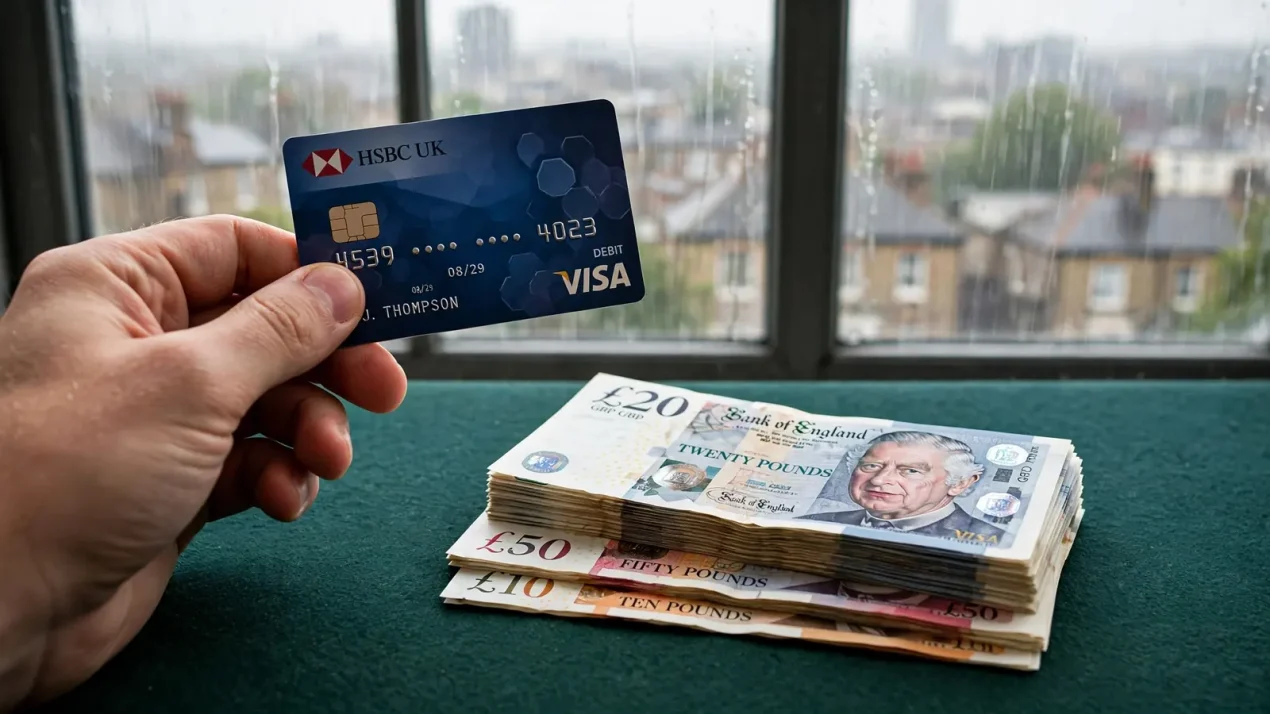
UK rules prohibit credit-card gambling deposits at licensed casinos, while debit cards are a separate payment option.
Why a UK-Licensed Casino Won’t Take Your Credit Card
If you are looking for a UK-licensed casino that will let you deposit with a credit card, the practical answer is that you will not find one operating within the rules. Remote gambling licensees serving the British market cannot accept credit-card payments for gambling. That applies whether you are paying directly by card or trying to route credit-card funds through another payment service.
This restriction is why a UK casino’s cashier should not offer a credit card as a way to fund gambling. A card logo or a general statement that a site accepts cards does not change the rule. “Card” can refer to different products, and it does not mean that credit-card deposits are permitted. A result described as a credit-card casino in the UK may therefore be using loose wording, referring to a different market, or describing a site that is not operating under a UK Gambling Commission licence.
The distinction matters because remote gambling operators selling into the British market must hold the relevant UK licence, regardless of where the business is based. An overseas address does not create an exception for an operator offering gambling to British customers. A site cannot become a lawful UK-licensed option simply by advertising itself as a casino that accepts credit cards.
Casinos That Accept Wirecard in the UK: What to Check
The restriction also cannot be avoided by putting another payment service between the card and the casino. If a wallet or money service can pass credit-card funds on for gambling, remote operators cannot accept those payments for that purpose. The relevant question is not only which brand or service appears at the checkout. It is whether the money used to fund gambling comes from credit. A different label on the transaction does not make that funding route acceptable.
That is why claims about credit-card casino deposits should be treated carefully. A site may display a payment method in a general list without showing that every version of that method is eligible for UK gambling deposits. It may also be describing an arrangement that is not available to customers in the UK. Even when a payment option appears on a page, it does not override the rules that apply to a remote gambling licensee.
For a reader seeking credit-card casino sites in the UK, the important point is not whether a search result uses the right-sounding phrase. It is whether the operator is licensed to serve British customers and whether the proposed payment is accepted for gambling under the applicable rules. A UK-licensed casino cannot take a credit-card payment for a gambling deposit, including one routed through a service that allows credit-card funding.
This also applies to searches for slots that take credit cards. The game does not change the nature of the payment: money deposited to gamble remains a gambling payment. There is no separate credit-card route created by choosing a slot rather than another casino game. A claim about a particular game or category cannot make a prohibited funding method acceptable.
Credit Card Prohibition
UK-licensed casinos cannot accept credit-card payments for gambling, regardless of whether the payment is direct or routed through another service.
The same principle applies when a site describes itself as outside a particular UK scheme or uses other language to suggest that different rules apply. Those labels do not, by themselves, establish that the site is a UK-licensed casino or that it can accept credit-card payments for gambling. A business serving the British market is not exempt from the relevant licensing requirements merely because it presents itself differently.
The restriction is not a temporary cashier setting or a preference that a casino can change for an individual customer. It is a rule for remote gambling licensees, so a request to enable credit-card deposits cannot make the transaction permissible. If a site claims that it can accept such a payment while serving UK customers, that claim deserves scrutiny rather than being taken as proof that a compliant UK option exists.
In short, “credit card casino” may appear in a site description, an advert or a payment list, but it does not describe a permissible deposit option at a UK-licensed casino. The label and the payment route are not the same thing. For gambling with a UK-licensed operator, credit-card payments are not accepted; a site promising otherwise is not evidence of an exception.
What “Best Credit Card Casinos” Can—and Can’t—Mean in the UK
A “best” label cannot make a credit-card gambling deposit available at a UK-licensed casino. It may describe a site’s general reputation, design or range of payment options, but it cannot identify a UK-licensed operator that accepts credit-card payments for gambling. In this context, the label is not evidence that the payment method is permitted.
That distinction matters because a page can use broad wording while describing several different things: a casino that accepts debit cards, a site that lists card brands somewhere on its payment page, or an operator serving customers under a different regulatory arrangement. Those are not interchangeable claims. If you are looking for a UK-licensed casino, a ranking headed “best credit card casinos” does not show that you can fund a gambling account with a credit card.
UK casino sites that accept Jeton: payment guide
Nor does a list of familiar card names settle the question. A specialist review may display Visa and Mastercard among a site’s payment options, but that does not establish that every card product bearing those names is eligible for every transaction, or that the option is currently available to customers in the UK. The card brand alone is not enough to confirm acceptance.
The operator’s cashier is the practical place to check what is available to you. Look at the payment methods presented for your account and the terms attached to them. A logo on a general information page can be out of date, can refer to a different card type, or can describe availability in another country. The cashier is more relevant because it presents the options the operator makes available for the account and location in question.
Even there, read the details rather than treating a card symbol as a complete answer. The product matters: a debit card and a credit card are not the same payment method, even when they carry the same brand. You should also confirm that the operator is presenting the option for UK customers, not merely advertising it somewhere on a site that serves several markets. If the cashier or its terms do not make the eligible card type clear, do not infer eligibility from the logo.
This is why a purported list of the “best” UK credit-card casinos would be misleading if it implied that the listed UK-licensed sites accept credit-card gambling deposits. A ranking can compare features only after those features have been established; it cannot override the conditions under which an operator serves customers in the UK. A confident heading is not a payment confirmation.
The same caution applies when wording combines card deposits with slots or mentions casinos outside GamStop. Those phrases do not, by themselves, confirm the site’s UK status, the card product being described or whether the cashier makes that method available to a UK customer. A page may use “credit card” loosely, or describe a service for a different market. Treat the claim as something to verify, not as a recommendation.
Do
- Check the operator’s actual license status
- Verify payment methods in the casino cashier
- Confirm the specific card product is accepted
Don’t
- Trust a “best” label as payment confirmation
- Rely on general card logos on info pages
- Assume “credit card” wording implies eligibility
For a useful comparison, separate the promotional label from the checkable details: whether the operator serves UK customers under the relevant licence, what exact payment product the cashier accepts, and whether that option is currently available to your account. If the claim depends only on a card logo or a ranking title, it has not answered the question you need answered.
Our top casino picks for the UK
- ChanzeBonus: Slots Welcome Bonus #1 200% up to €500 · Payout speed: 1-3 business days
- NightWinBonus: £900 + 400 free spins · Payout speed: 1-3 business days
- Revery PlayBonus: 100% up to€1,000+ 100 FS · Payout speed: 1-3 business days
- WinBeastBonus: €5000 + 500 FS + €650 Freebet · Payout speed: 1-3 business days
- EvoSpinBonus: 125% up to €2500 + 125 Free Spins · Payout speed: 1-3 business days
- BritsinoBonus: Welcome Package – Get your £2,200 + 2,000 FS · Payout speed: 1-3 business days
- AmunbetBonus: Join now and get 450% up to 2,700 GBP + 450 FS · Payout speed: 1-3 business days
- SlotoSportBonus: 500% up to £ 10 200+ 777 FS · Payout speed: 1-3 business days
- BeOnBetBonus: 100% up to €500 + 100 FS · Payout speed: 1-3 business days
Depositing and Withdrawing: Why the Payment Route Matters
A deposit and a withdrawal are two stages of one transaction, but they do not necessarily move at the same speed or through the same visible steps. If you are comparing an online casino’s payment options, check how money can leave the account as well as how it can enter. The method shown at the deposit stage does not, by itself, tell you when a payout will arrive.
For UK players, there is an important limit at the outset: a UK-licensed casino cannot accept a credit-card payment for gambling. That means a quick credit-card deposit is not a route available at a licensed casino. More generally, a payment method’s speed into an account should not be treated as a guide to the speed of a withdrawal.
A specialist casino-payment review describes card deposits as potentially instant, while a payout may take several business days. The difference reflects the steps involved. A deposit can be authorised by the payment provider and credited to your casino balance quickly. A withdrawal may first need to be checked and approved by the casino, then processed by the payment provider or bank. The time shown for a payout can therefore include more than the final transfer.
Casino sites that accept Skrill in the UK: payment guide
The return route also matters. UK anti-money laundering rules generally require a casino to send funds back to the original payment source. This is part of the closed-loop approach: money is not simply directed to any account you nominate after the fact. If you deposited using one method, the casino may need to return funds to that source before using another route, depending on the transaction and its procedures.
That can make the cashier’s withdrawal options look different from its deposit options. A method may be available to fund an account but not to receive a payout. Where the original source cannot accept the withdrawal, the casino may request another method or further checks before sending funds. Do not assume that a payment option listed under deposits can also be used for withdrawals; confirm both directions before choosing it.
The first withdrawal can involve additional friction. A specialist payment review notes that processing may take longer while a customer’s identity and account details are verified. KYC, or identity checks, help the operator confirm who owns the account and payment source. If documents or details are still outstanding, a withdrawal may not proceed until the checks are complete. Later payments can still depend on the casino’s approval process and the receiving provider.
UK anti-money laundering rules generally require casinos to return funds to the original payment source, often referred to as a closed-loop approach.
Using an account and payment method in your own name, with details that match your casino account, can reduce avoidable questions about who owns the funds. Keep access to the payment account you used, and check whether the casino requires a particular route for returns. These are practical checks, not a guarantee of a particular processing time.
When reading a cashier’s terms, separate the casino’s approval time from the provider’s transfer time. Also check whether the stated estimate starts when you request a withdrawal or only after the casino approves it. That distinction helps explain why a deposit may appear immediately while a payout remains pending. The payment route is part of the transaction, not just a button selected at checkout.
Can You Use a Credit Card for Online Gambling in the UK?
No. Remote gambling operators serving customers in Great Britain cannot accept credit-card payments for gambling. That applies to online casino deposits and to other forms of remote gambling. If you are asking whether a credit card can fund an account that you then use to gamble, the answer is still no.
The restriction is not limited to entering credit-card details directly on a casino’s payment page. It also covers credit-card funds routed through a money service business. Moving the payment through an intermediary does not make it an acceptable way to pay for gambling. A payment route cannot turn credit borrowed on a card into a permitted gambling deposit simply by adding another step.
Casinos That Accept Citadel in the UK: How to Check
This distinction matters because payment screens can make a transaction look like an ordinary transfer or account top-up. The relevant point is the source and use of the funds: remote operators must not accept credit-card payments for gambling, including where a money service business sits between the card and the gambling account. The same restriction applies when the intended activity is casino play rather than another type of online gambling.
A site displaying a card brand does not, by itself, mean that every product carrying that brand can be used. Nor does the presence of a payment intermediary establish that credit-card-funded gambling is allowed. The applicable rule concerns credit being used to pay for gambling, not merely the name or appearance of the payment route.
The restriction is about funding gambling, not a general ban on using a credit card for unrelated purchases. It does not mean that a credit card cannot be used for ordinary spending elsewhere. But when the payment is for remote gambling, the operator cannot accept it as a gambling payment. That is the practical answer whether you are considering a casino account, a bet, or another remote gambling service.
The rule applies to remote gambling operators selling into the British market, wherever those operators are based. A different location or a payment process that looks unlike a standard card transaction does not remove the requirement. Online gambling in the UK is legal through operators holding the appropriate UK Gambling Commission licence; those operators remain subject to the credit-card restriction.
Attention: Using a money service business as an intermediary does not make credit-card funding acceptable for gambling deposits.
This is a firm boundary rather than a question of whether a particular cashier happens to offer a card button. If you are trying to make a gambling deposit with borrowed card funds, the operator cannot accept that payment. A payment option being visible on a page should not be read as permission to use a credit-card product for gambling.
The answer, then, is no: you cannot use a credit card to pay for online gambling through a remote operator serving the British market. That includes a direct card payment and credit-card funds passed through a money service business. The rule has not been relaxed, so the answer does not change according to the type of remote gambling or the route used to deliver the credit-card funds.
What “Non-GamStop” Credit-Card Searches Leave Unanswered
A site described as “non-GamStop” is not, by that label alone, a suitable place to deposit. The wording tells you something about its relationship to a self-exclusion scheme; it does not establish who regulates the operator, whether it is authorised to serve people in Great Britain, or whether the payment option advertised is available to you.
Those are separate questions. Remote gambling operators serving customers in Great Britain need a UK Gambling Commission licence. A site outside that system does not become an authorised UK casino because it advertises itself as available to British players or lists familiar payment brands. Nor does a claim to accept credit-card deposits make the transaction permissible under UK rules. The label and the payment claim should not be treated as evidence that the site is a legitimate UK option.
UK Casinos Accepting EcoPayz (Now Payz)
There is another gap between a payment logo and a usable payment route. A specialist review may list Visa or Mastercard, but that does not show that a particular card product is eligible or that the method is currently available to UK customers. The cashier is the place to check the options actually presented for your account. A logo on a promotional page is not confirmation that the same method will appear there.
The word “card” can also leave the important detail unstated. A listing may name a card network without making clear which kind of card it refers to. That distinction matters: a payment method being listed does not establish that a credit card can be used for gambling. The site’s wording cannot alter the rules that apply to remote gambling in the UK.
Before relying on any such claim, establish the operator’s regulatory position and read the payment terms rather than inferring either from the site’s name or its marketing. If the operator is not licensed by the UK Gambling Commission, it sits outside the protections and oversight of the British licensing system. Offshore sites may be accessible to UK residents, but access does not make them UK-licensed.
A search result can therefore leave the central practical points unresolved: whether the operator is licensed for the market, whether the listed card is eligible, and whether the cashier offers that method to a UK customer. “Non-GamStop” answers none of those by itself. It is a label, not a payment guarantee or a regulatory status.
Why “Non-GamStop” labels are insufficient
Such labels only describe a site’s relationship to a self-exclusion scheme. They do not establish the operator’s regulatory status in the UK or guarantee that advertised payment methods are actually available to you.
When the Credit-Card Gambling Ban Took Effect
The UK credit-card gambling ban dates from 14 April 2020. That is the date the regulator banned credit-card gambling. The rule has not since been relaxed, so the date is not merely a marker of an earlier policy that no longer applies.
For anyone checking whether credit cards are allowed for gambling in the UK, the historical point is straightforward: the restriction was introduced on that date and remains in force. A casino’s current wording, a payment logo, or an old description of its services does not change when the regulator acted or indicate that the ban has been lifted.
The date also helps separate a continuing rule from a temporary payment disruption. The restriction is not described as a short-term measure, and there has been no relaxation since it was introduced. If a site suggests that credit-card gambling is now permitted, that claim conflicts with the continuing position for UK-licensed gambling.
It is worth being precise about what the date tells you. It identifies when the regulator imposed the ban; it does not, by itself, explain every consideration behind the decision. Nor does the fact that the rule has remained in place mean that a particular website’s payment information is current or accurate. Those are separate questions. Historical context can establish that the restriction is longstanding, but it is not a substitute for checking what an operator is permitted to accept now.
UK Casinos That Accept Upaycard: How to Check
The date is sometimes easy to lose amid changing payment pages and descriptions of casino services. A page may be revised, a payment provider may change what it supports, or old information may remain online. None of those changes moves the date of the ban. More importantly, they do not amount to a change in the rule: as matters stand, it has not been relaxed.
That distinction matters when reading claims about a UK casino credit-card ban. A reference to the policy’s introduction should not be mistaken for evidence that it has expired, while a recent publication date should not be mistaken for proof that the policy has changed. The relevant historical fact is the regulator’s action on 14 April 2020; the relevant present-day fact is that the restriction remains in force.
So, if you are trying to place the ban on a timeline, use 14 April 2020 as its date. If you are trying to establish whether a later relaxation has made credit-card gambling permissible at UK-licensed casinos, the answer is no: the ban has not been relaxed. The date gives the background; the continuing rule determines the current position.
What to Check Before Making a Casino Deposit
The minimum deposit is not necessarily the same for every payment method. A specialist review places the starting point in the £10–£20 range, with the precise amount depending on the method selected. Treat that as a guide, not a promise: the cashier is where you can see the minimum that applies to your account before you confirm a payment.
Before making a deposit
- Check the minimum deposit for the chosen method
- Review transaction and account maximums
- Ensure payment details match your casino account
- Set a financial limit as required by UK rules
- Verify the currency of the transaction
Maximums can be more complicated. A casino may set separate caps for a single transaction, a day or a month, and those caps can differ by payment method and account status. A specialist review describes these limits as variable rather than universal. Check the operator’s current terms and the cashier’s displayed limits; a figure shown for one payment route may not apply to another.
Your account status matters because an operator may apply different limits depending on whether it has completed its checks. Make sure the personal and payment details you provide belong to you and are consistent. That can reduce avoidable friction over basic ownership details, though it does not determine what limits the casino will set.
There is also a limit-setting step to expect before you pay. UK Gambling Commission rules require remote gambling licensees to prompt new customers to set a financial limit before their first deposit and to make account-level limit controls accessible. Consider that control alongside the payment method’s own maximum: the amount you are permitted to deposit is not necessarily the amount you should choose to spend.
Before confirming, check the displayed minimum, any transaction or account limits, and the currency in which the deposit will be taken. If a limit or condition is unclear, resolve it with the operator before sending money. A displayed maximum is a ceiling, not a spending target.
Are Credit Cards Allowed at UK Online Casinos?
No. A UK-licensed online casino cannot accept credit-card payments for gambling. If you are looking for a credit card casino in the UK, the key point is that a site serving customers under a UK Gambling Commission licence must not offer credit cards as a way to fund gambling.
Casinos That Accept Echeck in the UK: Payment Guide
The restriction applies to the payment, not just to a particular type of game or account. A remote gambling licensee cannot accept credit-card funds routed through a money service business as a workaround. Nor can it accept a payment from a wallet that allows credit-card funds to be used for gambling. Changing the route does not make the underlying credit-card payment acceptable.
That means a payment option described simply as a “card” is not enough to tell you whether it can be used. The relevant question is whether the card product is a credit card or another type of payment card, and whether the operator permits that product for gambling. The cashier should identify the methods available to your account; a generic card logo does not override the restriction.
The rule applies to UK-licensed casinos even if a site’s wording or payment page appears to suggest otherwise. If you encounter a credit-card option presented for gambling, do not assume it is permitted because the transaction seems to go through. A compliant operator must not accept that payment for gambling.
This is a firm restriction, not a temporary cashier setting or a preference that an operator can change. The regulator introduced the ban on 14 April 2020, and it remains in force. For a UK player, the practical answer is therefore no: credit cards are not an allowed way to pay for gambling at a UK-licensed online casino.
Credit Card Ban
UK-licensed casinos are strictly prohibited from accepting credit cards for gambling deposits.
Paying by Card: The Debit-Card Distinction
When a UK casino lists card payments, the relevant option is generally a debit card. A debit card takes payment from funds in your bank account; a credit card uses borrowing. That difference matters because UK-licensed casinos cannot accept credit-card payments for gambling. Seeing “Visa” or “Mastercard” on a payment page does not mean that a credit card from either network can be used.
Visa and Mastercard debit cards are commonly accepted at UK casinos. However, a network logo is not confirmation that every card carrying it will work. Card products differ, and a payment option shown in a general review may not match what is available to you in the UK now. A specialist casino review listing Visa or Mastercard is a starting point, not a guarantee of acceptance.
Check the casino’s cashier before trying to pay. Look for a debit-card option and read any conditions attached to it. The cashier is where you can confirm whether the operator currently supports payments from your card type and whether your location is eligible. If the option is absent, or the transaction is declined, do not assume that switching to a credit card will solve the problem.
It is also worth checking what kind of card you hold. Some cards combine features or may be described in ways that make the distinction less obvious. The name of the card network alone does not tell you whether the funds are debit or credit. If you are unsure, check with your card provider before entering payment details.
For a UK casino deposit by card, think “eligible debit card”, not simply “Visa” or “Mastercard”. That is the useful distinction: the network may be accepted, while a particular card product or its current UK availability still needs to be confirmed in the cashier.
Playing Slots Without a Credit-Card Deposit
A slot game does not have a separate payment rule from the rest of a casino. If you are in the UK and want to play slots for money, the funds must first be available in your gambling account. A credit-card payment cannot be used to put those funds there, even when you intend to spend them only on slots.
That distinction matters because a payment can be described in different ways on a website. Calling it a slot deposit, a gaming balance top-up or a payment for a particular game does not change its purpose: it funds gambling. There is no special credit-card route created by choosing slots rather than another casino game.
The restriction applies to remote gambling operators and includes credit-card funds passed through a money service business. Nor can a wallet be used to get around the rule if it allows credit-card funds to be used for gambling. The relevant point is the source and use of the money, not the name given to the transaction.
If you are checking whether a slot session can be funded by card, distinguish a credit card from other card products. The fact that a payment screen mentions cards does not by itself mean that credit-card deposits are permitted. Check the payment option and its eligibility in the casino cashier before attempting a transaction.
The rule is not a restriction on slots as a game type. It is a restriction on how gambling funds may be supplied. A casino may offer slots while still being unable to accept a credit card for the balance used to play them. Any claim that a credit card works specifically because the deposit is for slots should therefore be treated with caution: the intended game does not create an exception to the gambling-payment restriction.
Can I use a credit card at 333 Casino in Great Britain?
No, if 333 Casino is serving you as a UK-licensed operator: UK-licensed casinos cannot accept credit-card payments for gambling, including through a payment service that passes on credit-card funds.
Do UK casino withdrawals require verification?
Yes, verification may be needed, particularly before a first withdrawal. The casino may take longer to approve a payout while completing those checks.
Can I deposit in GBP?
Yes, GBP is supported by the supplied sites. Check your account currency before your first transaction to avoid conversion.
What is the current minimum deposit?
The minimum deposit usually starts at £10–£20, depending on the payment method.
Related posts

Terms of Use

UK Casino Sites and Slots: Licensing and Play