
Casinos that accept Litecoin in the UK: what to check
 Available in GB

Payment checks cover cashier availability, withdrawals, limits, conversion costs and alternatives if Litecoin is unavailable.
What to check before looking for a Litecoin casino
A casino that advertises cryptocurrency payments has not necessarily confirmed that it accepts Litecoin. The distinction matters: a broad “crypto” label may refer to other coins, or to payment options that are not available to every customer. Treat Litecoin support as unconfirmed until it appears as a selectable method in the casino’s own cashier for your account.
A specialist review of casino payment information describes sites mentioning Visa, Mastercard, bank transfer, e-wallets and several cryptocurrencies. That describes a range of payment types, not a verified list of casinos that take Litecoin. It is not evidence that a particular casino currently supports this coin, or that a general cryptocurrency option includes it. A named list based on that description alone would give more certainty than the information warrants.
Look for Litecoin by name
Before registering or moving funds, find the operator’s payment information and look for Litecoin specifically. A page that says “cryptocurrency accepted” is not enough to establish which coin is supported. Nor is the presence of a crypto logo, a general reference to digital assets or an old review. The useful confirmation is a current option labelled Litecoin in the cashier, rather than wording that could cover several different currencies.
Casinos That Accept Wirecard in the UK: What to Check
The cashier is important because payment arrangements can change. An operator may update its available methods, or a method may not be offered to every account. A list on an external page can therefore become stale even if it was accurate when written. If Litecoin does not appear as a selectable option, do not assume that customer support can enable it or that another coin will work in its place. Ask the operator directly if the display is unclear, and rely on a clear answer about Litecoin rather than a general assurance about cryptocurrency.
Check who is offering the service
Payment support and legal status are separate questions. In Great Britain, remote gambling licensees serving customers must hold the relevant licence from the Gambling Commission, wherever the operator is based. A casino’s claim to accept Litecoin does not establish that it is authorised to offer gambling to British customers. Check the operator’s licence on the UK Gambling Commission’s public register before depositing.
Casinos That Accept Maestro in the UK
This is not a technicality that can be settled by a payment logo. A site may describe itself as UK-friendly or display British currency without that wording proving it holds the necessary UK licence. Equally, the presence of a licence does not prove that Litecoin is available. Check both points independently: whether the operator is licensed for the British market, and whether Litecoin is actually offered to your account.
Do not treat a list as a live cashier
When comparing casinos, note where each claim comes from and how specifically it is worded. “Accepts crypto” is broad; “Litecoin is available” is more precise, but still needs checking against the operator’s current payment screen. A review or payment guide can help you decide where to look, but it cannot replace the cashier as confirmation of a live option.
Be particularly cautious with pages promising an exhaustive list of Litecoin casinos or presenting a “best” selection without showing how each entry was checked. A list may combine operators that support different coins, describe past availability, or repeat a general claim from another page. The number of entries does not make the underlying payment detail more reliable. The practical test is whether the licensed operator itself shows Litecoin as available.
Casinos That Accept Echeck in the UK: Payment Guide
The same caution applies to casinos described as new. A recent launch or a newly updated page says nothing by itself about which payment methods can be used. Likewise, a site’s support for cryptocurrency does not show that Litecoin is included. These labels can help you decide what to investigate, but should not be treated as confirmation.
Make the decision on a specific option
If Litecoin is a requirement, keep the check narrow. Identify the operator, confirm its UK Gambling Commission licence, then inspect its cashier for a Litecoin option before depositing. If the casino’s public payment page and cashier use different wording, ask which coin the option covers and whether it is currently enabled for your account. Do not infer support from a generic crypto statement.
This approach is less convenient than relying on a ready-made list, but it avoids mistaking a broad payment claim for a specific one. Until the operator’s own cashier displays Litecoin, it is safer to regard that casino’s Litecoin support as unverified.
Verifying Litecoin Support
Identify the operator
Find the specific casino you wish to use.
Confirm the licence
Check the operator’s status on the UK Gambling Commission’s public register.
Inspect the cashier
Sign in and verify that Litecoin is listed as a selectable option for your account.
Clarify with support
Ask the operator directly if the wording in the cashier is unclear before depositing.
Our top casino picks for the UK
- ChanzeBonus: Slots Welcome Bonus #1 200% up to €500 · Payout speed: 1-3 business days
- NightWinBonus: £900 + 400 free spins · Payout speed: 1-3 business days
- Revery PlayBonus: 100% up to€1,000+ 100 FS · Payout speed: 1-3 business days
- WinBeastBonus: €5000 + 500 FS + €650 Freebet · Payout speed: 1-3 business days
- EvoSpinBonus: 125% up to €2500 + 125 Free Spins · Payout speed: 1-3 business days
- BritsinoBonus: Welcome Package – Get your £2,200 + 2,000 FS · Payout speed: 1-3 business days
- AmunbetBonus: Join now and get 450% up to 2,700 GBP + 450 FS · Payout speed: 1-3 business days
- SlotoSportBonus: 500% up to £ 10 200+ 777 FS · Payout speed: 1-3 business days
- BeOnBetBonus: 100% up to €500 + 100 FS · Payout speed: 1-3 business days
If Litecoin is unavailable: other ways to pay
If you cannot use Litecoin, the cashier may offer familiar UK payment routes instead. These include debit cards, bank transfers, open banking, prepaid vouchers and e-wallets. Their practical differences are less about the name on the button than about how you fund the payment, whether the route suits your account and what happens when you later want to withdraw.
Debit cards
Debit cards are a common alternative at UK casinos. Visa and Mastercard are among the card networks you may see listed. A debit card draws on money in your bank account, rather than providing borrowed funds. That distinction matters: credit-card payments for gambling are prohibited by UK rules, so do not treat a credit card as an alternative simply because it carries a familiar card logo.
A card may feel straightforward if you already use it for everyday purchases. Before choosing it, check that the payment screen accepts your particular card and that the account and card details match. A logo on a general payments page does not establish that every card product or transaction will work for you.
Bank transfers and open banking
A bank transfer moves money from your bank account to the casino using bank details or a payment instruction. Open banking is a way to authorise a payment through a connection to your bank, without manually entering a card number. The exact steps depend on the provider and the cashier.
Casinos that accept Bitcoin in the UK: payment checks
A specialist review describes open banking and bank transfers as routes that can offer instant deposits and fast withdrawals at many sites. That is not a promise for every casino or every account: the available service and its timing can differ. The useful distinction is that the payment is connected directly to your bank, rather than to a cryptocurrency wallet or prepaid code.
These options may suit you if you prefer to see the transaction in your banking activity. Read the authorisation screen carefully and make sure you recognise the amount and recipient before approving anything. Do not assume that choosing a bank-linked route means the same service will be available for every later transaction.
Prepaid vouchers
Paysafecard is a prepaid voucher used for deposits only. You buy a voucher and enter its code at a participating cashier, rather than paying directly from a bank account at the point of deposit. This can appeal if you want to set aside a specific amount of cash for gambling.
The important limitation is that Paysafecard is deposit-only. It is not a route for receiving a casino payout. If you choose a voucher, consider how you would handle any withdrawal before putting money into the account; a deposit method and a payout method do not necessarily serve the same purpose.
E-wallets
An e-wallet holds or transfers funds through a separate payment account. Skrill and Neteller are examples that appear at some casino sites, but availability varies by operator. A specialist review describes them as available at some sites and often excluded from promotions. If a promotion matters to you, check its terms before using either wallet rather than assuming that an accepted payment method qualifies.
Debit Cards
Visa and Mastercard networks. Funds are drawn directly from your bank account.
Bank Transfers
Direct movement of money via bank details or open banking connections.
Prepaid Vouchers
Deposit-only options like Paysafecard using a prepaid code.
E-wallets
Separate payment accounts such as Skrill, Neteller, or PayPal.
PayPal is another name you may encounter. A specialist review characterises it as popular for speed and convenience, while also noting that it may be excluded from bonus eligibility. Those are not guarantees about a particular casino: confirm the cashier’s current options and the promotion rules directly.
Wallets can make it easier to separate a payment from your main bank-card details, but they add another account and set of terms to manage. Check that the wallet is in your name and that you understand how funds enter it. UK gambling rules also restrict wallet payments where the wallet allows credit-card funds to be used for gambling. A payment option should not be treated as suitable merely because it appears in a list.
Choosing a route
Think first about what you need from the payment method. A debit card may be familiar; a bank-linked service may be easier to authorise through your own bank; a voucher can separate a deposit from direct card use; and an e-wallet may suit someone who already maintains a wallet account. None is automatically the best choice for every player.
Also distinguish a general payment description from a live option for your account. A casino may advertise several routes, while its cashier presents a narrower selection. Check the terms attached to the method you intend to use, including whether it is deposit-only and whether the account is eligible. That small check is less glamorous than a new payment technology, but it is where the practical answer usually sits.
Check deposit and withdrawal compatibility in the cashier
A payment method appearing in a casino’s deposit menu does not, by itself, show that you can use it to withdraw. Deposit and payout options may differ, and the available routes can depend on the operator’s current arrangements and your account. Before sending money, check both sides of the cashier: the deposit methods and the withdrawal methods. Treat a method as suitable for the full payment cycle only when the operator confirms that it supports both.
Casinos that accept Dogecoin in the UK: what to check
That distinction matters when you are looking for casinos that accept Litecoin. A reference to cryptocurrency, or a deposit option that appears to involve digital currency, does not establish that Litecoin is supported for withdrawals. Nor does a page describing Litecoin deposits confirm that the option is currently available to UK customers. Check the cashier while signed in, and read the payment terms for any conditions attached to the method. If the information is unclear, ask customer support to confirm the exact currency and whether it can be used for both deposits and payouts before you make a payment.
The same check applies to cards. A specialist review lists Visa and Mastercard among the payment methods offered by the sites it examined, but that is not a guarantee that either card type is available to you now. The cashier is the place to confirm current UK availability and whether your particular card product is eligible. A card logo on a general payments page may cover more than one card product; it is not proof that every card will work. For gambling payments in Britain, do not treat a credit card as an eligible option.
Look for separate labels such as “deposit” and “withdrawal”, rather than assuming that one list covers both. If the cashier lets you choose a method for depositing but does not show it as an available payout route, check the operator’s terms before proceeding. A displayed method can also be subject to account checks or other eligibility conditions. Confirming those details first is more useful than discovering a restriction after funds have been sent.
Credit Card Ban
Credit-card payments for gambling are prohibited by UK rules and must not be used for deposits.
A common anti-fraud and anti-money-laundering control is to return funds to the original payment source. This is sometimes called a closed-loop rule. It can mean that the route used to deposit affects how a withdrawal is handled, even if another payout method is displayed elsewhere. If the original source cannot receive the funds, the operator may offer an alternative, but that route can involve additional verification. Ask what happens in that situation before depositing; do not assume that a different method will be substituted automatically.
Keep the account and payment details consistent. Using an account and payment route that belong to the same customer can reduce avoidable friction over ownership checks. This does not guarantee that a transaction will be approved, but it avoids creating a basic mismatch that the operator may need to investigate. If a method is registered to someone else, or the payment details do not match the account holder, ask the casino whether it is permitted before using it.
The practical check is straightforward: confirm the method is available in the UK cashier, establish whether it supports deposits and withdrawals, and read any conditions that apply to your account or payment product. For Litecoin in particular, verify the specific currency rather than inferring support from a generic cryptocurrency reference. A payment method is only compatible with your plans when the operator confirms the relevant route at both ends.
Casinos That Accept Interac in the UK: What to Check
Playing online slots on a phone
A phone can make it easy to browse slots, but it does not change the rules that apply to online play in Britain. If you are considering a slot alongside Litecoin payments, treat the game and the payment method as separate things to check: a game working on your phone does not establish that Litecoin is available for it, or even accepted by the casino.
Before playing, check that the casino’s mobile site or app is the operator’s own service and that the operator holds a current UK Gambling Commission licence. Remote gambling licensees serving Great Britain must be licensed, and players must be aged 18 or over. Be wary of pages that use “mobile” or “Litecoin” in their description as if those words alone establish who operates the service or what its terms are.
On a smaller screen, make sure you can read the game information and reach its controls without relying on guesswork. Check the displayed rules before starting, including how to set a stake and how to stop play. A cramped interface is not a reason to skip the terms; if important information or controls are difficult to use, pause rather than placing a stake you did not intend.
British online slots have specific play restrictions. Autoplay is banned, so a game must not be set to run a sequence of spins automatically. Each spin must also last at least 2.5 seconds. These rules apply whether you are playing in a phone browser or on another device, and regardless of whether your deposit was made in pounds or cryptocurrency. A button that appears to offer faster repeated play does not override them.
Do
- Verify the operator’s UKGC licence
- Check stake and spin controls on screen
- Keep manual control of each spin
Don’t
- Rely on “mobile” or “Litecoin” labels for legality
- Use autoplay features
- Assume a mobile label confirms payment routes
For a mobile session, keep control of each spin yourself and check the stake shown on screen before confirming it. Touchscreens can make it easier to tap the wrong control, particularly when buttons are close together. If the game does not make the stake or spin control clear, close it and find a version that presents the information plainly; convenience is not a substitute for knowing what you are authorising.
The phrase “Litecoin slots” can refer to different things: a slot played on a phone, a casino that accepts Litecoin, or a game promoted as being linked to cryptocurrency. Those are not interchangeable claims. Read the operator’s terms and the game information directly, and do not assume that a mobile label confirms a particular payment route or a special version of a slot. Mobile access describes the device you use; it does not change the game’s rules or establish the payment options available to your account.
Real-money slot play and account limits
A slot that can be played for free is not necessarily available for real-money play, and a game title does not establish which payment methods a casino accepts. If you are looking to play slots for money with Litecoin, treat the game, the casino account and the payment method as separate things to verify. A real-money game involves wagering funds; a free-play version does not, even if the screens look similar.
For customers in Great Britain, remote gambling licensees must hold the relevant UK Gambling Commission licence. Before depositing, check the operator’s licence on the Commission’s public register. This matters because the account protections described here apply to UKGC-licensed operators, not simply to a site that happens to be accessible from the UK.
Casinos That Accept POLi in the UK: What to Check
A UKGC-licensed operator must ask new customers to set a financial limit before they make their first deposit. The prompt is intended to make you consider how much you are prepared to spend, rather than discover the available controls after you have started playing. The operator must also make account-level limit controls accessible.
Take time to find those controls in the account area and understand what each one covers before adding funds. A financial limit is useful only if you can locate it and tell what it applies to. If the wording is unclear, check the operator’s explanation rather than assuming that a limit on one part of the account automatically governs every kind of spending.
This is separate from choosing a payment method. A limit governs your account’s gambling activity; it does not confirm that Litecoin is available, that a particular slot can be played with it, or that a free-play version can be switched to real-money play. Those details need to be established independently. Do not treat a page that mentions Litecoin as proof that the cashier will offer it for your account.
You can also distinguish a real-money offer from a free game by checking whether the operator requires an account and a deposit to wager cash. “No deposit” wording should not be taken as proof that real-money play is available without payment or that a Litecoin offer exists. Read the terms attached to the specific game or promotion, and do not rely on a label alone.
If the account does not present the required limit-setting prompt before your first deposit, pause rather than depositing and looking for controls later. Once you are satisfied that the account is within the UKGC system and that you understand its limit settings, you can make a separate decision about whether the payment option you want is actually available.
Account Limits
UKGC-licensed operators must prompt new customers to set a financial limit before their first deposit is made.
Deposits, card rules and getting your money back
A deposit method and a payout method are not automatically the same. Even if a cashier displays a way to add funds, that does not establish that you can withdraw to it. With a Litecoin payment, check the operator’s terms and cashier for the route available to your account before depositing; do not assume that a Litecoin deposit can be sent straight back as Litecoin.
UK anti-money laundering rules generally require a casino to return funds to the original payment source. This is part of the closed-loop approach to payments: the operator may need to send a payout back to the account or method used to deposit, rather than let you choose an unrelated destination. If the original route cannot receive a payout, the casino may ask for another method or further checks. Using payment details that belong to you, and keeping them consistent, can reduce avoidable questions about ownership.
Card rules also affect what you can use. Credit-card payments for gambling have been prohibited since 14 April 2020, and the ban remains in force. A casino serving the UK market must not accept a credit card for a gambling deposit, including a credit-card payment routed through a money service business. A debit card is different, but the label alone is not enough: check that the card product and payment route are eligible in the cashier. Do not treat a credit card as a fallback if a Litecoin option is unavailable.
Casinos That Accept Citadel in the UK: How to Check
A payout may take longer than a deposit. A specialist gambling review reports that withdrawal processing can include the casino’s internal approval, and that a first withdrawal may take longer while verification is completed. That is a reason to finish any requested checks before relying on a payout route, not a promise of a particular processing time. The operator may need to confirm your identity and establish that the payment account is yours.
For a direct withdrawal request, read the cashier’s instructions carefully. “Direct” does not mean that a payout bypasses the casino’s review or the original-source control. If the cashier lists a method for deposits, look separately for its withdrawal status and any conditions attached to your account. Where the casino cannot return funds to the original source, ask what alternative it permits and whether extra verification is required before you send money.
Bonus terms are separate from payment acceptance
A casino accepting a payment method does not mean that method qualifies for every promotion. A deposit can be processed successfully while still being ineligible for a welcome offer or another bonus. The cashier and the promotion’s terms answer different questions: one shows which payment routes are available to you; the other sets out which deposits count.
This distinction matters if you are looking for a Litecoin casino bonus. Do not assume that a site’s mention of cryptocurrency confirms that a Litecoin deposit would qualify for a promotion. Nor does a bonus advertised for new customers establish that every payment method is included. Check the offer’s terms for any exclusions before you deposit, and confirm that they apply to the specific payment method you intend to use.
Bonus Eligibility
Accepting a payment method does not guarantee it qualifies for promotions; check for specific exclusions in the bonus terms.
Payment-related exclusions can affect familiar e-wallets too. A specialist casino review reports that PayPal may be left out of bonus eligibility. The same kind of review reports that Skrill and Neteller are often excluded from promotions. These are reported caveats, not a rule that applies to every casino or offer; the operator’s current terms are the relevant place to confirm eligibility.
Read the wording attached to the particular promotion rather than relying on a general bonus page or an old description of a payment method. Look for named exclusions and any requirement that the deposit be made using an eligible route. If the terms do not make clear whether your chosen method counts, ask the operator before paying and keep its response.
A bonus code does not override payment exclusions. Entering a code, seeing an offer on screen or having a deposit accepted is not, by itself, confirmation that the deposit qualifies. Check the promotion’s terms before you opt in or deposit, and make sure you understand what happens if the payment method is excluded.
Treat any offer presented alongside a Litecoin payment option as two separate claims to verify: that Litecoin is currently available to you, and that a deposit made with it is eligible for that particular promotion. Without that confirmation, do not count a bonus in your decision about where to play.
Minimum deposits, limits and the cost of conversion
A small advertised minimum does not tell you whether Litecoin is available or what you can deposit with it. The payment methods offered, and their thresholds, can differ between casinos. A specialist casino-payment review places common minimum deposits in the £10–£20 range, varying by method. Treat that as a guide to the methods it discusses, not confirmation of a Litecoin minimum or a promise that a £5 deposit will be accepted. Check the cashier’s displayed minimum for the specific method before deciding how much to transfer.
Casinos that accept Monzo: payment facts to check
Maximum deposits also depend on the route you choose and your account status. A casino may set a cap for one transaction and separate limits for deposits over a day or month. These figures can therefore differ even where the same payment method is involved. Read the limits shown in the cashier and account terms rather than assuming that a method’s advertised minimum also tells you its maximum.
For Litecoin, the amount you send is not necessarily the full cost of paying. If a transaction involves converting between currencies, the exchange rate may include a spread: the difference between the rate used for your payment and a reference rate. A specialist payment review also identifies possible charges from the casino, the payment provider, your card issuer or bank, and the cryptocurrency network. Which costs apply depends on the route and the transaction, so check the terms and any amount displayed before confirming.
A visible flat charge is not the only cost to consider. A less favourable conversion rate can have a larger effect on the amount received than a separately stated fee. If the casino account is not held in pounds, check the account currency and how conversion is handled; otherwise, the displayed deposit and the value credited may not match your expectations.
The practical comparison is the total cost of the amount you intend to deposit, alongside the method’s own minimum and maximum. Do not send Litecoin on the assumption that a low deposit threshold applies: first confirm that Litecoin is actually listed in the cashier, then review the transaction details and limits shown for that option.
Potential Litecoin Costs
Costs may include a spread in the exchange rate if converting currencies, as well as charges from the casino, payment provider, card issuer, bank, or the cryptocurrency network.
Comparing alternatives by payout speed and cost
If Litecoin is not available, compare payment routes by how a withdrawal is handled, not just by how quickly money can be deposited. A deposit may appear in your account promptly while the return journey follows a different process. The cashier’s withdrawal options and terms are more useful than a general claim that one method is the fastest.
A specialist casino review identifies PayPal, open banking services and debit cards connected to fast payout systems as potentially quick withdrawal routes. That is not a guarantee for every casino or account. The operator still has to approve the withdrawal, and an incomplete verification can delay it. Check whether the method is available for withdrawals at the site you are considering and whether your account is ready for KYC checks before relying on a stated processing time.
Bank transfers have different timing considerations. A specialist payment review notes that delivery can depend on the bank’s cut-off times, weekends and currency conversion. A transfer initiated late in the day, before a weekend, or involving a change of currency may therefore reach you later than expected. These factors concern delivery after processing; they do not show how quickly the casino itself will approve a withdrawal.
Cost is also part of the comparison. A route with a short stated processing time may still involve charges or a currency conversion, while a slower route may avoid some costs. Check the casino’s terms and the payment provider’s information for the transaction you intend to make. If the account balance and your receiving account use different currencies, confirm how conversion is handled before withdrawing.
There is no dependable ranking that applies across all operators. Compare the available withdrawal methods, any listed fees, the account verification requirements and the stages between requesting a payout and receiving it. Treat speed claims as conditional: internal approval, completed verification and payment-system timing all matter. A method that looks quick on paper may not be quick for your particular account or transaction.
Casinos That Accept WebMoney in the UK: What to Check
Litecoin and casinos outside GamStop
A casino’s relationship with GamStop and its payment options are separate matters. A site may be described as not connected to GamStop, but that description does not confirm that Litecoin is accepted. Equally, a reference to cryptocurrency does not establish that a site accepts Litecoin or that it is outside GamStop. Treat claims combining both points as unverified until you can confirm each one independently.
For a casino serving customers in Great Britain, the relevant regulatory question is whether the operator holds a current UK Gambling Commission licence. Remote gambling businesses selling into the British market need the appropriate licence, wherever they are based. A site operating beyond the UKGC system does not have that licence, and a label such as “not on GamStop” is not a substitute for checking an operator’s status.
Before relying on a claim, look for the operator’s exact legal name and check it against the Commission’s public register. Then read the operator’s own terms and payment information, and check the cashier after signing in to see which methods are available to your account. Do not infer Litecoin support from a general reference to crypto, or infer GamStop status from an advert or a third-party description. Both details can change, and similar-looking site names can make it unclear which operator a claim refers to.
There is also an important distinction between a site being outside GamStop and a site being outside UK regulation. If an operator offers real-money gambling to customers in Great Britain, it must hold a UKGC licence; offshore location does not remove that requirement. Claims about a site’s location or self-exclusion arrangements do not establish that it is legally authorised to serve you.
If you use GamStop to exclude yourself from gambling, do not treat a Litecoin payment option or a site’s claimed status as a reason to work around that choice. The combination of a payment method and an exclusion status is not proof of safety, regulatory standing or suitability. Verify the operator through the register, and consider whether gambling is appropriate for you before opening an account.
What is the fastest withdrawal method for UK casinos?
PayPal, open banking and debit cards linked to fast payout systems are generally among the quickest options. Your account’s verification status and the casino’s approval process also affect how quickly you receive the money.
Can I deposit in GBP?
Yes, GBP is supported at the sites covered here. Check your account currency in the cashier before depositing to avoid conversion.
Which payment methods are accepted in Great Britain?
UK casino cashiers commonly offer debit cards, bank transfers, open banking, prepaid vouchers and e-wallets. Check the cashier for the methods available to your account; a general cryptocurrency listing does not confirm that Litecoin is accepted.
Which method has the lowest fees?
There is no universally lowest-fee method. Compare the casino’s charges, provider or bank fees, exchange-rate spread and any network costs for the payment you plan to make.
Related posts

Terms of Use
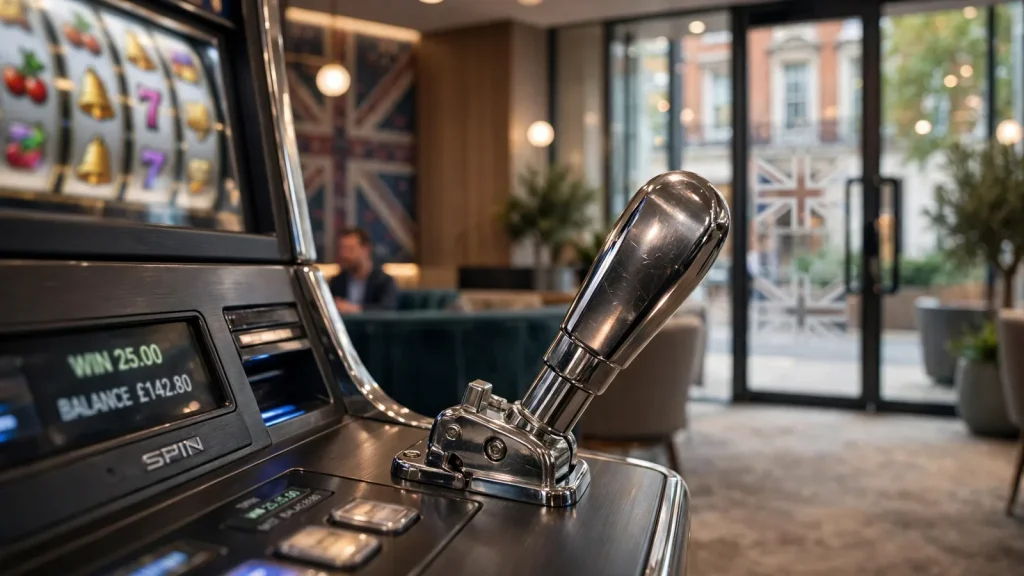
UK Casino Sites and Slots: Licensing and Play